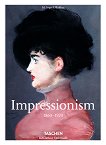
It was a dappled and daubed harbor scene that gave Impressionism its name. When Impression, Sunrise by Claude Monet was exhibited in April 1874, critics seized upon the work's title and its loose stylistic rendering of light and motion upon water to deride this new, impressionistic, tendency in art. As with many seminal art movements, the critics got their comeuppance. Today, Impressionism is close contender for the world's favorite period of painting. With blockbuster exhibitions, record-breaking auction prices, and packed museums, the works once dismissed as unfinished or imprecise are now beloved for their ... |
|
|
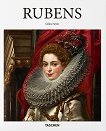
There are over 1,000 catalogued works by Sir Peter Paul Rubens (1577 - 1640), the 16th-century flag bearer for Baroque drama, movement, and sensuality. This essential introduction takes in the most important works from this astonishingly prolific oeuvre to explore Rubens’s influences and innovations, and his remarkable visual, and art historical, impact. The richly illustrated survey takes in Rubens’s portraits, landscapes, and historical paintings, as well as his famed and bountiful nudes. Along the way, we examine the artist’s astonishing technique and his deft ability to depict narrative in a compelling and legible ... |
|
|
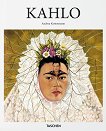
The arresting pictures of Frida Kahlo were in many ways expressions of trauma. Through a near-fatal road accident at the age of 18, failing health, a turbulent marriage, miscarriage and childlessness, she transformed the afflictions into revolutionary art. In literal or metaphorical self-portraiture, Kahlo looks out at the viewer with an audacious glare, rejecting her destiny as a passive victim and rather intertwining expressions of her experience into a hybrid surreal-real language of living: hair, roots, veins, vines, tendrils and fallopian tubes. Many of her works also explore the Communist political ideals which ... |
|
|
Multilingual Edition (English, French, German). ... An international guide to contemporary packaging design. Packaging is a highly underrated art form. As the first thing a consumer sees when looking at a product, it can make or break a sale. Every year, the Pentawards celebrate the art of the package by recognizing the world's most groundbreaking and influential designs. Designers compete in five main categories - beverages, food, body, luxury, and other markets - and no fewer than 50 sub-categories. Featuring a selection of hundreds of works, this book brings together Pentawards winners from 2008 to 2016, ... |
|
|
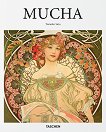
All about the Belle Époque. Delicate illustration that defined an era. ... With his instantly recognizable decorative style, Czech artist and Art Nouveau master Alphonse Mucha (1860 - 1939) defined the look of the fin-de-siecle. In evocative shades of peach, gold, ochre, and olive, his seductive compositions of patterns, flowers, and beautiful women became paradigms of the Belle Époque years. Mucha's work permeated illustration, posters, postcards, and the advertising designs of his day. His striking posters of star actress Sarah Bernhardt were particularly famous. Alongside this delicate decorative work, ... |
|
|
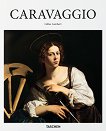
Michelangelo Merisi da Caravaggio (1571 - 1610) was always a name to be reckoned with. Notorious bad boy of the Italian Baroque, the artist was at once celebrated and controversial, violent in temper, precise in technique, a creative master, and a man on the run. Though famed for his dramatic use of color, light, and shadow, it was above all Caravaggio's boundary-breaking naturalism which scorched his name into the annals of art history. From the dirtied soles of feet to the sexualized languor of bare flesh, the artist allowed even sacred and biblical scenes to unfold with a startling, often visceral humanity. This ... |
|
|
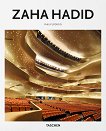
Zaha Hadid was a revolutionary architect, who for many years built almost nothing, despite winning critical acclaim. Some even said her audacious, futuristic designs were unbuildable. During the latter years of her life, Hadid's daring visions became a reality, bringing a unique new architectural language to cities and structures as varied as the Rosenthal Center for Contemporary Art in Cincinnati, hailed by The New York Times as the most important new building in America since the Cold War; the MAXXI Museum in Rome; the Guangzhou Opera House in China; and the London 2012 Olympics Aquatics Centre. At the time of her ... |
|
|
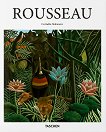
Henri Rousseau (1844 - 1910) was a clerk in the Paris customs service who dreamed of becoming a famous artist. At the age 49, he decided to give it a try. At first, Rousseau’s bright, bold paintings of jungles and exotic flora and fauna were dismissed as childish and simplistic, but his unique and tenacious style soon won acclaim. After 1886, he exhibited regularly at Paris’s prestigious Salon des Indépendants, and in 1908 he received a legendary banquet of honor, hosted by Picasso. Although best known for his tropical scenes, Rousseau, in fact, never left France, relying on books and magazines for inspiration, as ... |
|
|
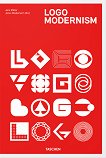
Изданието е триезично - на английски, немски и френски език. ... An unprecedented catalog of modern trademarks. Modernist aesthetics in architecture, art, and product design are familiar to many. In soaring glass structures or minimalist canvases, we recognize a time of vast technological advance which affirmed the power of human beings to reshape their environment and to break, radically, from the conventions or constraints of the past. Less well-known, but no less fascinating, is the distillation of modernism in graphic design. This unprecedented Taschen publication, authored by Jens Muller, brings together ... |
|
|
Multilingual Edition (English, French, German). ... How complex ideas are communicated via graphics."If you can’t explain it simply, you don’t understand it well enough." Albert Einstein Our everyday lives are filled with a massive flow of information that we must interpret in order to understand the world we live in. Considering the complex variety of data floating around us, sometimes the best - or even only - way to communicate is visually. This unique book presents a fascinating perspective on the subject, highlighting the work of the masters of the profession, creators of breakthroughs that have changed ... |
|
|
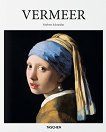
Though numbering just 35 known works, the œuvre of Johannes Vermeer (1632 - 1675) is hailed as one of the most important and inspiring portfolios in art history. His paintings have prompted a New York Times bestseller, a film starring Scarlett Johansson, and record visitor numbers at art institutions from Amsterdam to Washington. Vermeer's subjects focus on daily domestic activities, from letter writing to music playing to preparations in the kitchen. The scenes astound with their meticulous detail, majestic planes of light, and with Vermeer’s extraordinary ability to draw out narrative intrigues. In such ... |
|
|
"In Genesis, my camera allowed nature to speak to me. And it was my privilege to listen." Sebastiao Salgado On a very fortuitous day in 1970, 26-year-old Sebastião Salgado held a camera for the first time. When he looked through the viewfinder, he experienced a revelation: suddenly life made sense. From that day onward - though it took years of hard work before he had the experience to earn his living as a photographer - the camera became his tool for interacting with the world. Salgado, who "always preferred the chiaroscuro palette of black-and-white images," shot very little color in his early ... |