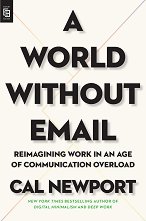
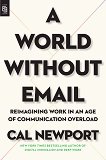
Reimagining work in an age of communication overload. Modern knowledge workers communicate constantly. Their days are defined by a relentless barrage of incoming messages and back and forth digital conversations a state of constant, anxious chatter in which nobody can disconnect, and so nobody has the cognitive bandwidth to perform substantive work. There was a time when tools like email felt cutting edge, but a thorough review of current evidence reveals that the hyperactive hive mind workflow they helped create has become a productivity disaster, reducing profitability and perhaps even slowing overall economic growth. ... |
|
|
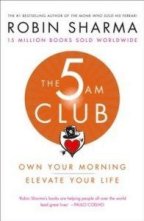
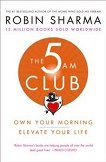
Own your morning elevate your life. Legendary leadership and elite performance expert Robin Sharma introduced The 5am Club concept over twenty years ago, based on a revolutionary morning routine that has helped his clients maximize their productivity, activate their best health and bulletproof their serenity in this age of overwhelming complexity. Now, in this life-changing book, handcrafted by the author over a rigorous four-year period, you will discover the early-rising habit that has helped so many accomplish epic results while upgrading their happiness, helpfulness and feelings of aliveness. Through an ... |
|
|
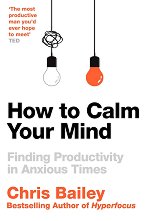
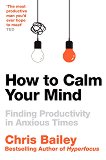
Finding productivity in anxious times. A toolkit of accessible, science-backed strategies, How to Calm Your Mind reveals the path to a less anxious life, and even greater productivity, through calm. Productivity advice works - and we need it now more than ever - but it's just as important that we also develop our capacity for calm. By finding calm and overcoming anxiety, we don’t just feel more comfortable in our own skin, we invest in the missing piece that leads our efforts to become sustainable over time. We build a deeper, more expansive reservoir of energy to draw from throughout the day, and have greater mental ... |
|
|
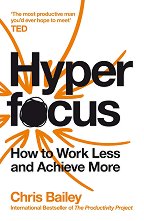
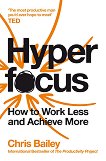
How to work less and achieve more? Hyperfocus by Chris Bailey is a practical guide to managing your attention - the most powerful resource you have to become more creative, get stuff done, and live a more meaningful life. In Hyperfocus, you will learn: how working fewer hours can increase our productivity; how we get more done by making our work harder, not easier; how we do our best creative work when we're the most tired. Our attention has never been as overwhelmed as it is today and we've never been so busy while accomplishing so little. In Hyperfocus, Chris Bailey provides profound insights into how ... |
|
|
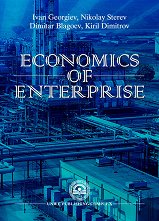
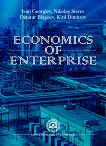
The book "Economics of Enterprise" provides a theoretical as well as a methodological knowledge for the analysis and justification of major economic and organizational solutions in the enterprise. The book introduces the newest economic and managerial theories and explains the common practice of the contemporary national or global (resp. international) enterprises. ... |
|
|
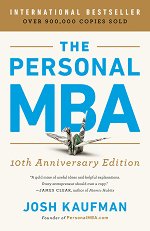
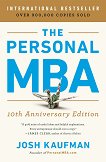
The 10th anniversary edition of the bestselling foundational business training manual for ambitious readers, featuring new concepts and mental models: updated, expanded, and revised. Many people assume they need to attend business school to learn how to build a successful business or advance in their career. That's not true. The vast majority of modern business practice requires little more than common sense, simple arithmetic, and knowledge of a few very important ideas and principles. "The Personal MBA 10th Anniversary Edition" provides a clear overview of the essentials of every major business topic: ... |
|
|
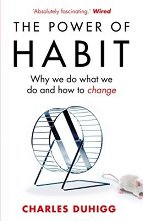
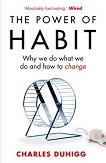
Why do we do develop habits? And how can we change them? We can always change. In The Power of Habit, award winning New York Times business reporter Charles Duhigg translates cutting edge behavioural science into practical self improvement action, distilling advanced neuroscience into fascinating narratives of transformation. Why can some people and companies change overnight, and some stay stuck in their old ruts? The answer lies deep in the human brain, and The Power of Habits reveals the secret pressure points that can change a life. From Olympic swimmer Michael Phelps to Martin Luther King Jr., from the CEO of ... |
|
|
The Second World War began on 1 September 1939 with the German invasion in Poland and ended in August 1945 with surrender of Japan. That global military conflict involved all of the great powers and most of the world’s nations. There were two opposing alliances: the Allies (USSR, Great Britain, USA etc.) and the Axis powers (Germany, Italy, and Japan). Second World War in Europe was fought on three fronts: Eastern, Western and Italian. The most bloody and devastating fights were on the Eastern front. The war ended with the total defeat of the Axis powers. Shortly after the outbreak of the war Hitler's Germany managed ... |